Driven by science.
Built for farmers.
Our work starts with evidence and ends with decisions farmers can actually use.
Common Ground Agriculture is a specialist soil and agricultural science practice, working with farmers and agricultural businesses Australia-wide to understand difficult soil and production problems, test management options under real farming conditions, and make decisions grounded in evidence.
We turn data into practical decisions that reflect the conditions, risks and commercial realities of each farming business.
undiagnosed and untreated
soil constraints will cost you every season.
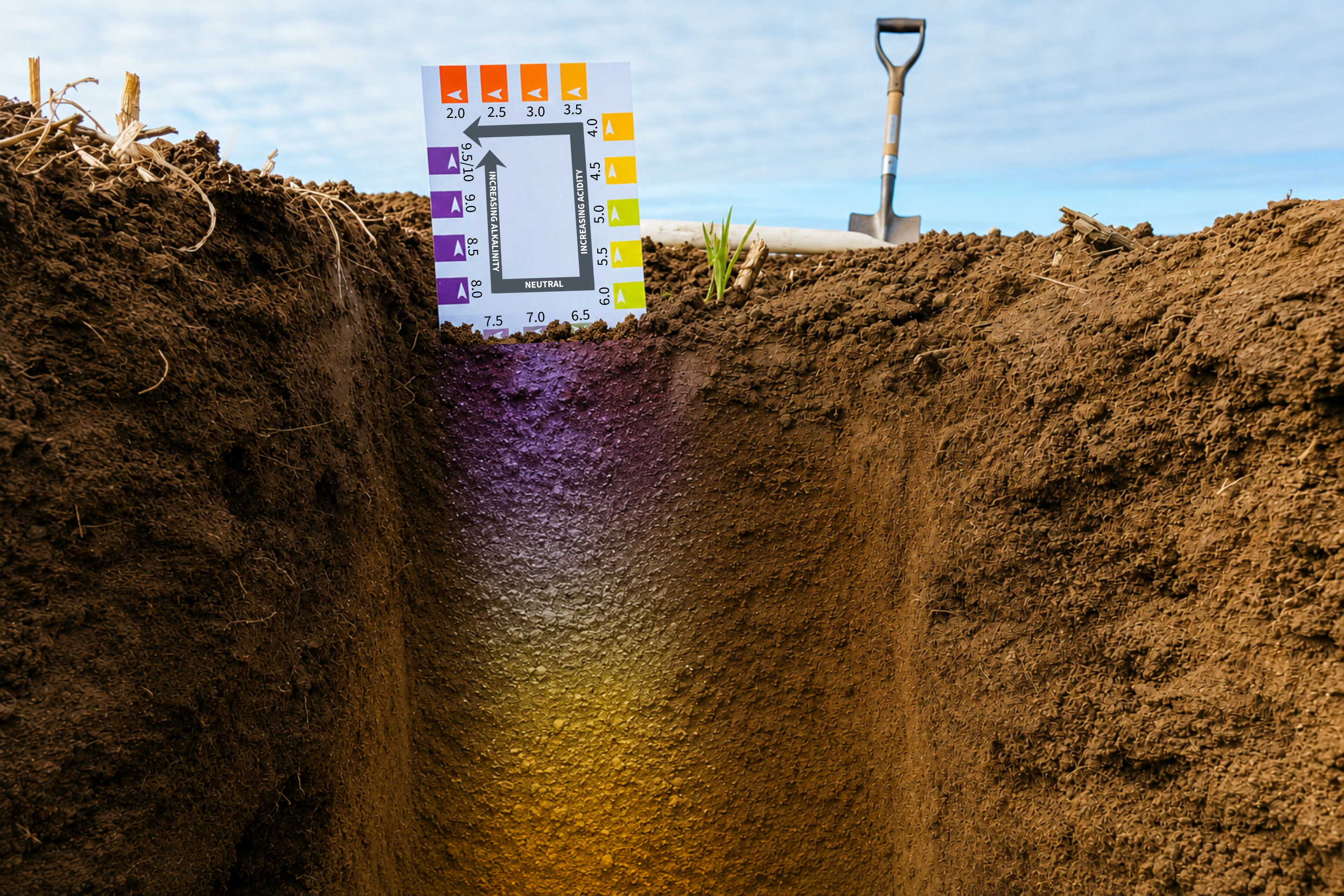
more fertiliser won’t overcome a soil constraint.
Around 77% of Australian cropping soils carry at least one significant constraint. In tight years, amelioration is the first thing deferred: a reasonable call when the return is uncertain. But, the constraint doesn't defer with it.
Acidity, sodicity, compaction, aluminium toxicity, salinity, and non-wetting soils can all restrict root growth, water use and nutrient access. They often occur together, across more than one soil layer, and they do not disappear between seasons.
These problems need more than another input.
They need a clear diagnosis and a strategy that tackles the constraint from several directions, bringing together expertise around soil chemistry, soil structure, plant response, cropping rotation, and practical delivery.
what we do
Six areas of work. All grounded in science, and shaped by commercial and operational reality
soil constraints and farming systems
01
Specialist advice on soil constraints, nutrient cycling, organic matter development, and soil function. We work directly with farmers and agronomists to identify what is limiting a paddock, design practical responses and interpret performance across the wider farming system.
Credible, replicated trials designed for commercial farming conditions. We test management options in the field and build evidence that farmers and agricultural businesses can use.
02
field trials and on-farm testing
Practical monitoring of soil, crop and environmental performance. We combine field measurements, spatial observations and whole-farm data to build a clearer picture of what is happening and support better decisions.
03
monitoring and data interpretation
Applied training and technical support for agronomists, advisors and agricultural organisations. We make complex science understandable without oversimplifying it.
training and technical communication
04
Technical development and testing of agricultural products and management technologies. We assess where they work, why they work and where their limits sit. For companies that value getting the science right and producing the data to support it.
product validation and technical support
05
Independent review of agricultural, soil and environmental projects before major decisions are made. We assess whether the science is sound, the proposed management changes are realistic, the risks are understood and the evidence supports the claims being made.
project feasibility review and due diligence
06
Independent. Evidence-first. Farmer-first.
A significant amount of technical material in agriculture presents plausible outcomes as established ones. We don't.
Our advice is independent, practical, and based on what the evidence supports.
We aren't here to sell products. We sell solutions, and their value depends on our advice being data-driven.
We're comfortable saying “we don't know yet” or “the evidence isn't strong enough”
Led by Dr Kirsten Ball
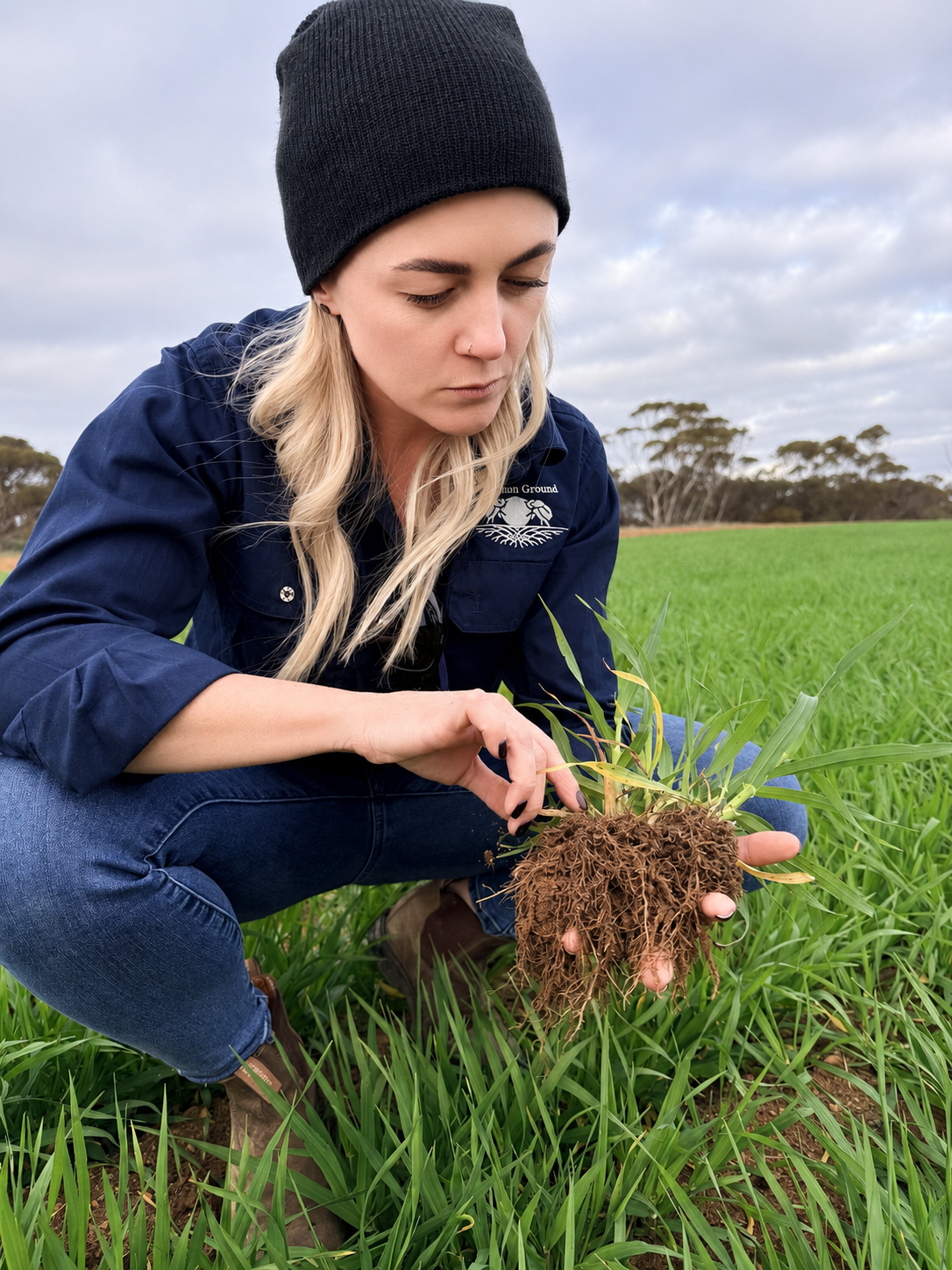
Common Ground is led by Dr Kirsten Ball.
She works in the paddock, designs and runs the field trials that test what changes soil constraints and what doesn't, and translates the results back into advice for growers, agronomists and product companies.
Kirsten has worked extensively on soil carbon methods and has advised regulators in Australia and the United States. She offers that expertise directly to landowners, helping them assess project claims, understand long-term obligations and identify where risk is being transferred onto the farm.
Farmers should not have to rely solely on advice from the organisations seeking their participation.
“We don’t produce outputs that overstate what the evidence supports. In agriculture, technical claims often run ahead of the data. Ours don’t. Our value lies in knowing where the evidence runs out, and being prepared to say so.”