
 Image 1 of 1
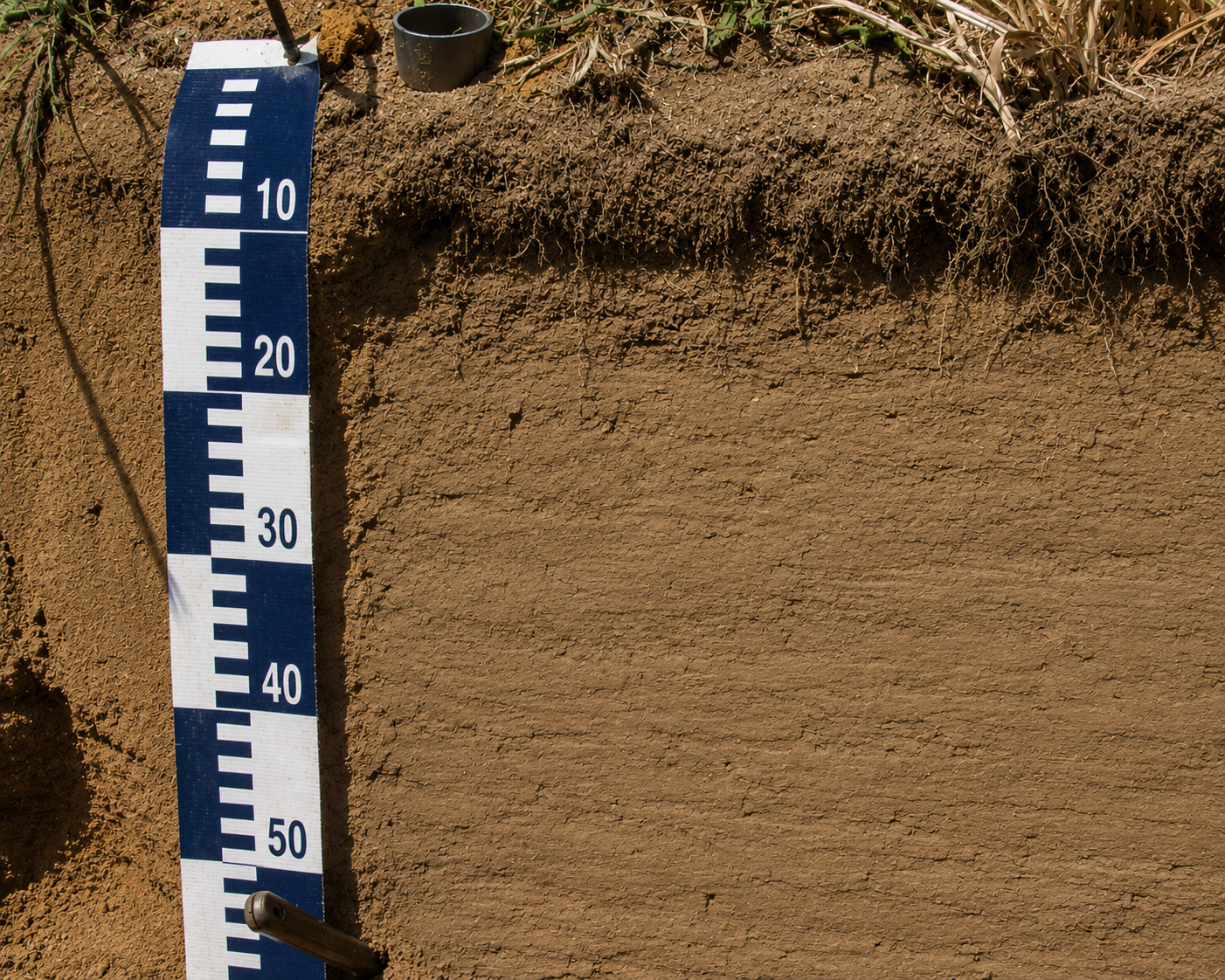
Compaction happens when machinery traffic, stock or cultivation packs soil particles closer together, collapsing the pore space roots, water and air need. In sands it usually shows up as a traffic pan at a consistent depth, just below where the seeder reaches, and roots can't push through it. A paddock looks fine on top while carrying a hard layer a spade's depth down, which is why compaction gets missed until yield or waterlogging patterns give it away.
But traffic isn't the whole story, and this is why ripping so often doesn't last. Many WA sands also hardset: when the soil wets, fine material is released into the water between the grains, and as it dries that material settles at the points where sand grains touch and bonds them together. The layer sets hard within a few days of drying past a critical point. Bulk density barely changes. Ripping resets the packing but leaves the fine material in place, so the bonds re-form on the next drying cycle. Compaction is a density problem; hardsetting is a bonding problem, and they need different answers.
That distinction changes what controlled traffic can do. CTF stops new traffic pans forming, and it's worth doing, but it can't remove existing compaction and it does nothing about hardsetting, because machinery never caused it. Treat CTF as maintenance, not as the fix.
Duplex sands over clay behave differently again. Ripping depth is limited by how deep the sand goes, ripping into a sodic B horizon can drag dispersive clay up into the topsoil, and the sand–clay boundary perches water: so the same paddock can waterlog in winter and set hard in spring. In deep sand, strength falls as the profile wets; in a duplex it can do the opposite. One recommendation won't cover both.
We measure strength in situ, at a recorded soil water content, because a hardsetting layer read dry will look far worse than it is and read wet will look like nothing. We pair that with bulk density and depth to the clay, since a hard layer with normal density is hardsetting, not compaction. From there the question is whether loosening alone is worth it, or whether the layer needs something incorporated to change how it behaves on drying, which is a bigger decision.
Compaction happens when machinery traffic, stock or cultivation packs soil particles closer together, collapsing the pore space roots, water and air need. In sands it usually shows up as a traffic pan at a consistent depth, just below where the seeder reaches, and roots can't push through it. A paddock looks fine on top while carrying a hard layer a spade's depth down, which is why compaction gets missed until yield or waterlogging patterns give it away.
But traffic isn't the whole story, and this is why ripping so often doesn't last. Many WA sands also hardset: when the soil wets, fine material is released into the water between the grains, and as it dries that material settles at the points where sand grains touch and bonds them together. The layer sets hard within a few days of drying past a critical point. Bulk density barely changes. Ripping resets the packing but leaves the fine material in place, so the bonds re-form on the next drying cycle. Compaction is a density problem; hardsetting is a bonding problem, and they need different answers.
That distinction changes what controlled traffic can do. CTF stops new traffic pans forming, and it's worth doing, but it can't remove existing compaction and it does nothing about hardsetting, because machinery never caused it. Treat CTF as maintenance, not as the fix.
Duplex sands over clay behave differently again. Ripping depth is limited by how deep the sand goes, ripping into a sodic B horizon can drag dispersive clay up into the topsoil, and the sand–clay boundary perches water: so the same paddock can waterlog in winter and set hard in spring. In deep sand, strength falls as the profile wets; in a duplex it can do the opposite. One recommendation won't cover both.
We measure strength in situ, at a recorded soil water content, because a hardsetting layer read dry will look far worse than it is and read wet will look like nothing. We pair that with bulk density and depth to the clay, since a hard layer with normal density is hardsetting, not compaction. From there the question is whether loosening alone is worth it, or whether the layer needs something incorporated to change how it behaves on drying, which is a bigger decision.