
 Image 1 of 1
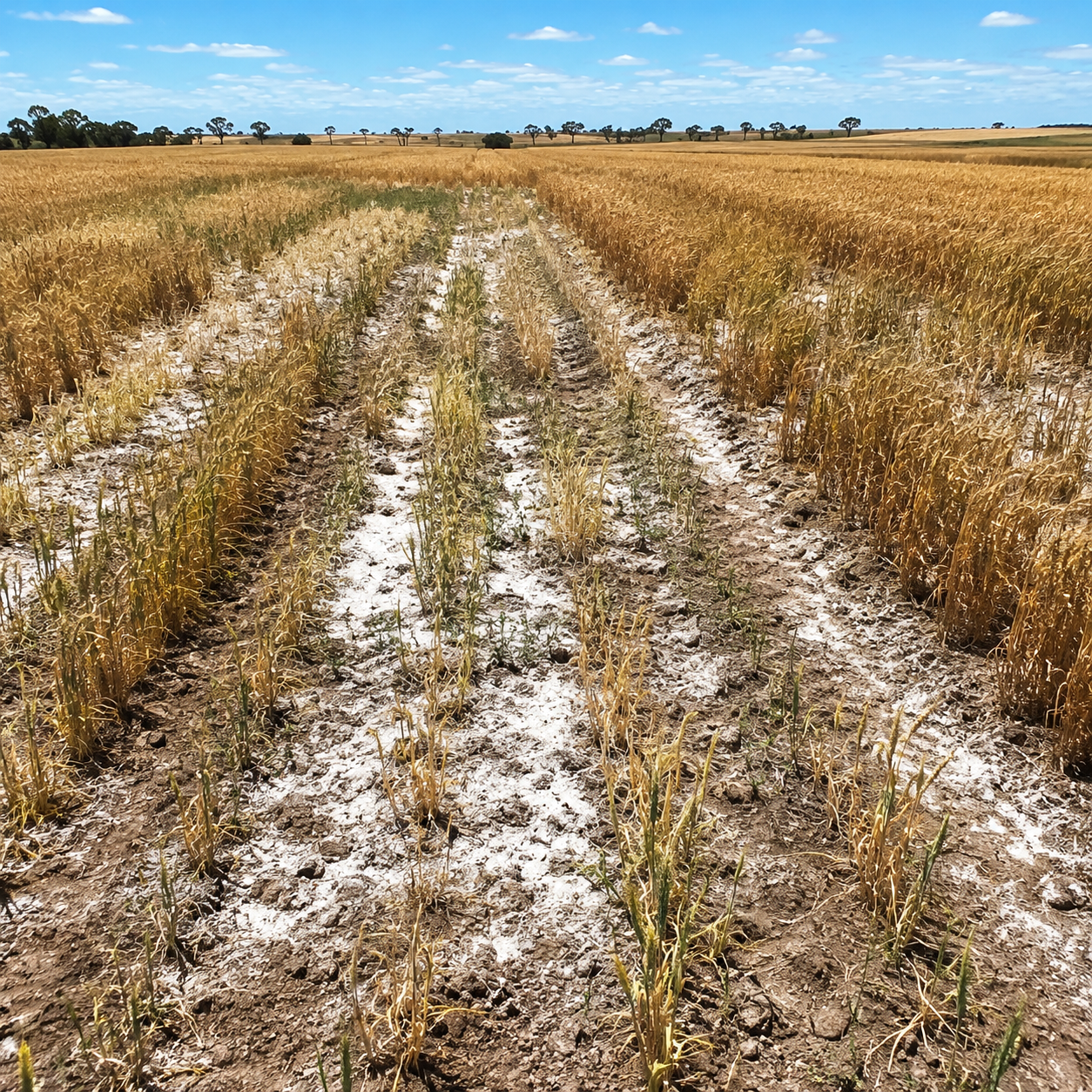
Salinity limits water uptake even when the soil looks moist. Salt holds water more tightly than roots can pull it.
Most of that salt is ancient: ocean spray deposited in rainfall over tens of thousands of years, held in the subsoil under native vegetation that used nearly all the rain. Clearing raised the water table and brought it up. In sodic soils it's different. Poor drainage concentrates salt in the root zone with no water table involved, and nothing shows on the surface.
Management shifts the balance further. Fertiliser salts concentrate in the furrow and can affect germination in dry-sown sands. Low organic matter means poor structure and slow drainage, so salt stays where the roots are instead of moving past them.
We work out which one you have and where it sits before recommending anything, and we're direct about which paddocks are worth the investment and which are better managed for what they are.
Salinity limits water uptake even when the soil looks moist. Salt holds water more tightly than roots can pull it.
Most of that salt is ancient: ocean spray deposited in rainfall over tens of thousands of years, held in the subsoil under native vegetation that used nearly all the rain. Clearing raised the water table and brought it up. In sodic soils it's different. Poor drainage concentrates salt in the root zone with no water table involved, and nothing shows on the surface.
Management shifts the balance further. Fertiliser salts concentrate in the furrow and can affect germination in dry-sown sands. Low organic matter means poor structure and slow drainage, so salt stays where the roots are instead of moving past them.
We work out which one you have and where it sits before recommending anything, and we're direct about which paddocks are worth the investment and which are better managed for what they are.